Remote Work in Taiwan: 6 Weeks of Adventure

Reading time: 9 minutes
One Tuesday morning in September, I was sitting in a coworking space in Taipei, taking my video calls while traffic rushed past the window on Zhongxiao East Road, when it hit me: Taiwan was exactly what I had been looking for in a workation. My Taiwan travel report begins with a decision I made three months earlier: instead of flying to southern Europe as usual, I wanted to find out whether Asia works for a remote worker.
Six weeks between the state-of-the-art infrastructure of Taipei and the breathtaking gorges of Taroko National Park showed me that Taiwan is one of the most underrated destinations for remote work. In this Taiwan travel report I share my honest impressions, concrete costs and also the challenges I hadn't expected.
Why Taiwan Is Perfect for Remote Work
Taiwan surprised me from the very first minute. The internet in my Airbnb in Taipei consistently delivered 150 Mbps download, and even in rural areas I never had less than 50 Mbps. According to the Speedtest Global Index 2024, Taiwan ranks 9th worldwide for mobile internet speeds, with an average of 142.94 Mbps. For comparison: that is more than twice as fast as in Austria.
The time difference to the U.S. East Coast is 12 to 13 hours, depending on daylight saving time. At first I thought that would make remote work in Taiwan impossible, but I developed a rhythm: in the mornings between 6 and 9 a.m. local time I took care of emails and asynchronous tasks, and from 9 p.m. I was available for meetings with clients in New York. You'll find more tips for handling challenges like this in my article on mastering time zone differences on workations.
Living and Working in Taipei: My First Three Weeks
I lived in the Da'an district, centrally located between the MRT stations Zhongxiao Fuxing and Daan Park. My 35-square-meter (about 377 sq ft) apartment cost the equivalent of $680 a month, significantly cheaper than comparable studios in New York. The neighborhood is popular with young Taiwanese: there are countless cafés, night markets like the Tonghua Night Market and modern coworking spaces.
For my workdays I mainly used CIT Taipei in the Xinyi District. A day pass costs 400 TWD (about $13), a monthly pass 6,000 TWD (about $200). The space is in a high-rise with a view of Taipei 101 and offers not only fast Wi-Fi but also meeting rooms and a rooftop terrace. I present more international options for digital nomads in my post on coworking spaces around the world.
Daily Life Between Work and Culture
My typical workday began around 7 a.m. with breakfast at Fika Fika Cafe on Anhe Road, known for its Scandinavian-inspired cinnamon rolls and Taiwanese coffee. After six to eight hours of work I explored the city: Longshan Temple in the old Wanhua district, the exhibitions at the National Palace Museum, or simply a stroll through the alleys of Shilin.
The cost of living in Taipei is moderate. A meal at a local restaurant costs 80 to 150 TWD ($2.70 to $5), a coffee about 100 TWD ($3.30). I spent an average of $38 a day, including accommodation, food, transport and leisure activities. That came to just under $1,150 for three weeks in Taipei.
Taroko National Park: Remote Work in Nature
After three weeks in the capital, I longed for nature. I took the train from Taipei to Hualien, a four-hour ride along the east coast for 440 TWD ($15). From Hualien it is only a 30-minute bus ride to the entrance of Taroko National Park. I rented a small guesthouse in Tianxiang, a tiny village in the middle of the park, for 450 TWD a night (about $15).
This is where my Taiwan travel report got wild: in the mornings I hiked through the marble gorges of the Shakadang Trail or to the Eternal Spring Shrine, and in the afternoons I worked on the porch of my guesthouse. The internet was slower at 20 Mbps, but it was enough for video conferences. The biggest challenge was the humidity, which my laptop didn't like. A small fan and regular breaks helped.
Weekend Trips in Hualien
On weekends I explored the coast. Qixingtan Beach, a pebble beach right on the Pacific, became my favorite place to switch off. In Hualien City I visited the Dongdamen Night Market, where I tried stinky tofu for the first time – an experience that divides opinion. The relaxed atmosphere of the east coast was the perfect contrast to the bustle of Taipei.
Visa and Bureaucratic Hurdles
As a U.S. citizen, I was granted a free 90-day visa-free stay on arrival. Taiwan is one of the few Asian countries that allow visa-free stays for U.S. and EU citizens. Important: you can't officially work with it, but remote work for foreign employers is tolerated as long as you don't take up local employment.
For longer stays, there has been the Gold Card program for highly qualified professionals since 2022. It allows a stay of up to three years with a work permit. The requirements are strict, though: you have to either work in a STEM field, prove a salary of at least 160,000 TWD a month (about $5,300), or demonstrate special professional achievements.
For protection I had taken out international health insurance that also covers Asia. I explain the details of why you need such insurance and what it covers in my post on health insurance requirements abroad.
The Downsides: What Surprised Me
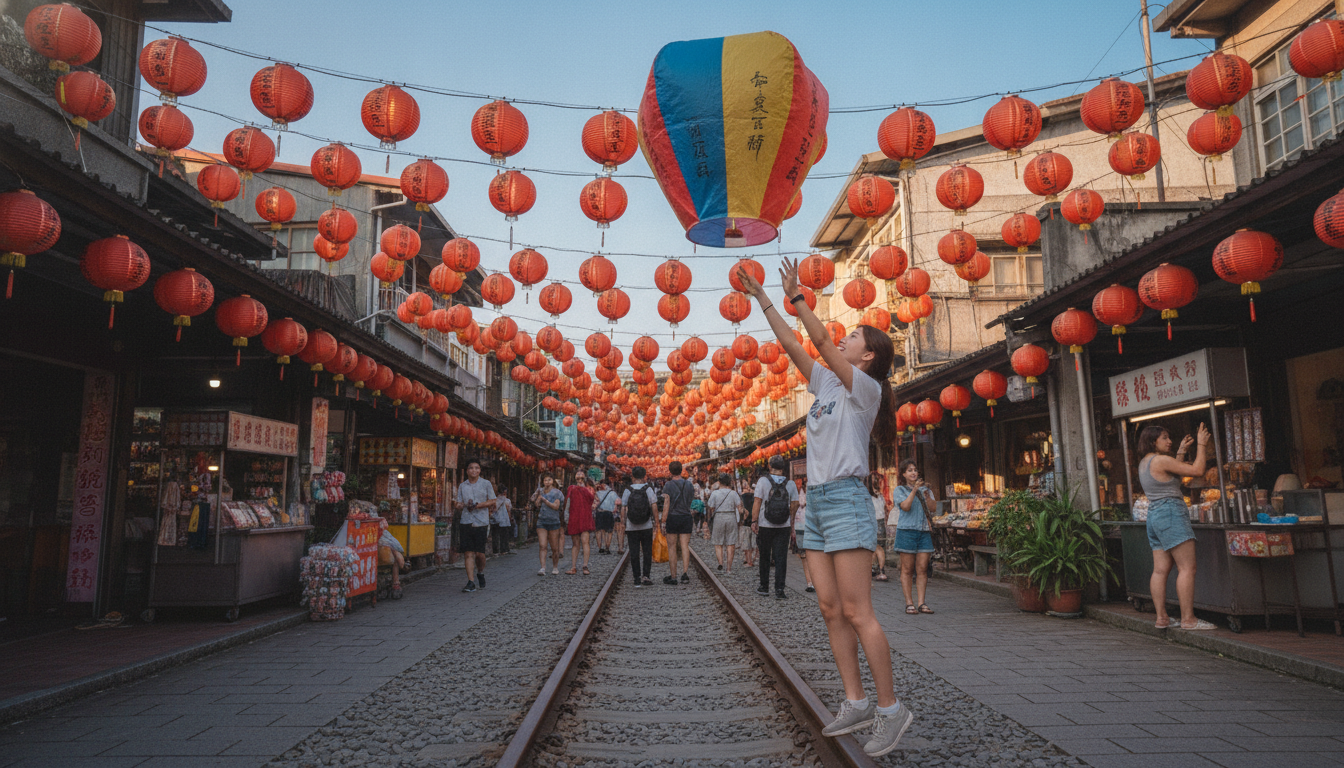
Not everything was perfect. Taiwan is incredibly safe and clean, but the language barrier was bigger than expected. Outside Taipei, few people speak English. In Tianxiang in Taroko National Park I often communicated through Google Translate or hand signals. It worked, but was sometimes frustrating.
The tropical climate also gave me trouble. In September it was 32 degrees Celsius (90 °F) in Taipei with 80 percent humidity. Even the walk to the coworking space left me drenched in sweat. Taiwanese people move between air-conditioned spaces, which took some getting used to. My electricity bill for three weeks came to the equivalent of $50, mainly because of the air conditioning.
Another point: Taiwan is more expensive than Thailand or Vietnam. If you're on a low budget, you should factor that in. Taipei costs about as much as European cities, only accommodation and food are cheaper.
Costs at a Glance: My 6-Week Summary
Here is a transparent breakdown of my expenses for six weeks of remote work in Taiwan:
- Flight New York–Taipei (round trip with China Airlines): $860
- Accommodation (3 weeks Taipei, 3 weeks Hualien/Taroko): $1,230
- Coworking space (monthly pass + day passes): $230
- Food (restaurants, markets, cafés): $680
- Transport (MRT, trains, buses, scooter rental): $200
- Leisure activities (museums, national park, excursions): $165
- Insurance and miscellaneous: $155
Total costs: $3,520 for six weeks. That is about $84 a day, a fair price for the experience and quality of life Taiwan offers.
Taiwan vs. Other Workation Destinations
Compared with my three months in Tbilisi, Taiwan was significantly more expensive, but also significantly more comfortable. The infrastructure, the internet and the safety are unbeatable. Compared with Southeast Asian countries like Thailand, Taiwan scores with fewer tourist crowds and a more relaxed atmosphere.
What makes Taiwan special is the mix of modernity and tradition. In Taipei you work in a high-rise with 5G internet, and on the weekend you hike through centuries-old temples or untouched nature. I haven't experienced this variety so concentrated anywhere else.
My Most Important Tips for Remote Work in Taiwan
If you plan to use Taiwan as a base for a workation, keep these points in mind: book your accommodation in Taipei through Airbnb or local platforms like 591.com.tw, where you'll find better prices than on Booking.com. For coworking spaces I recommend CIT Taipei or The Hive in the Xinyi District. Both have flexible plans and an international community.
Get a SIM card from Chunghwa Telecom when you arrive at the airport. For 1,000 TWD ($33) you get 30 days of unlimited 4G/5G internet with an average of 100 Mbps. That saves you searching for Wi-Fi and keeps you flexible.
Pack light: Taiwan has countless convenience stores like 7-Eleven and FamilyMart where you can buy everything you need. A compact packing list for Work and Travel is plenty. I only had a 40-liter backpack with me and didn't miss anything.
Cultural Quirks That Impressed Me
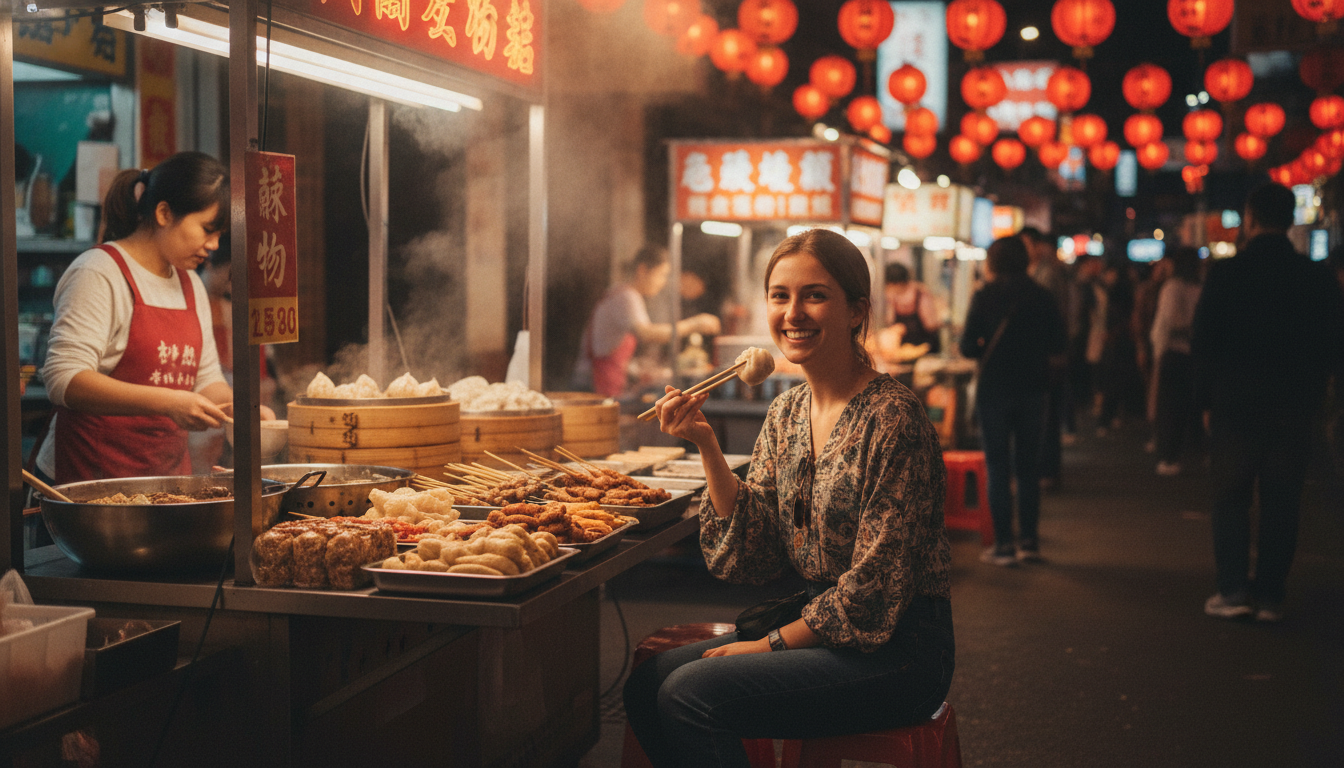
Taiwan is a land of quiet politeness. People hardly talk on the subway, lines are meticulously respected, and nobody pushes. This calm carried over into my work: I was more productive and relaxed than in European cities.
The food culture especially impressed me. Night markets are not just tourist attractions but a social meeting place for Taiwanese people. At the Raohe Street Night Market in Taipei I tried oyster omelet, pepper buns and bubble tea in its original form. In Taiwan, food is joie de vivre, not just eating.
The openness toward women traveling alone was also remarkable. I never felt unsafe, neither at night in Taipei nor in the rural regions. According to the Global Peace Index 2024, Taiwan is one of the safest countries in Asia.
Would I Come Back?
Absolutely. My Taiwan travel report is overwhelmingly positive. The combination of excellent infrastructure, breathtaking nature and a culture that unites calm and efficiency makes Taiwan ideal for an Asia workation. It isn't a bargain destination, but worth every dollar.
Next time I would explore the south: Tainan with its historic temples and Kaohsiung, the second-largest city with its up-and-coming art scene. The small island of Penghu, known for its beaches, is also on my list.
FAQ: Frequently Asked Questions About Remote Work in Taiwan
Do I need a visa for Taiwan as an American?
No, U.S. citizens are granted a free 90-day stay for tourist purposes on arrival. Remote work for foreign employers is allowed with it, as long as you don't take up local employment.
How fast is the internet in Taiwan?
Taiwan has one of the fastest internet networks in the world. In Taipei you often reach 150 Mbps and more in coworking spaces and hotels, and even rural regions offer at least 50 Mbps.
Is Taiwan expensive for digital nomads?
Taiwan's prices sit between Southeast Asia and Western Europe. Taipei costs about as much as Central European cities, while rural areas are much cheaper. You can get by well on $1,650 to $2,200 a month.
Which coworking spaces are there in Taipei?
Popular options are CIT Taipei, The Hive, CLBC and Impact Hub Taipei. Most offer day passes from 300 TWD ($10) and monthly passes from 5,000 TWD ($165).
How safe is Taiwan for women traveling alone?
Taiwan is one of the safest countries in Asia. The crime rate is low, and as a woman traveling alone I never felt unsafe, in cities or in the countryside.
Conclusion: Taiwan as an Underrated Workation Destination
My Taiwan travel report shows: this country offers everything remote workers need. Fast internet, modern infrastructure, a relaxed atmosphere and, at the same time, enough adventure for your days off. The time difference takes some adjusting, but is manageable with a bit of planning.
Taiwan is no longer a secret tip, but not yet overrun. If you're looking for an alternative to Thailand or Bali and are willing to invest a bit more, you'll find a paradise for an Asia workation here. In these six weeks I not only worked productively but also got to know a culture that made a lasting impression on me. Taiwan, we'll meet again.