Coworking Spaces Worldwide: My Top Picks
Reading time: 12 minutes
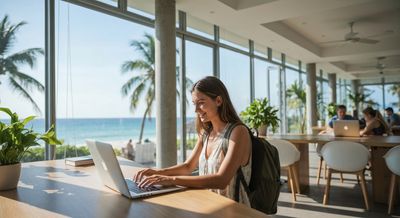
I'm sitting on the second floor of a converted colonial house in Canggu, Bali, typing these lines in one of the best coworking spaces I've ever visited. Palm trees rustle outside, a German developer team is debating on Zoom next to me, and downstairs an Australian woman is selling her online business for six figures. This exact mix is what makes coworking spaces for digital nomads so valuable: productive infrastructure meets an inspiring community. After three years as a remote worker in 17 countries, I'll show you where you can really focus and where only the Instagram facade holds up.
Choosing the right coworking space can double your productivity or blow your budget. I've experienced both extremes and share my concrete recommendations here, with prices, Wi-Fi speeds and real weak points.
Why coworking spaces beat the hotel room
On my first attempt to work from my hostel room in Bangkok, a task that normally takes 90 minutes took me four hours. The Wi-Fi kept dropping, the air conditioner sounded like a helicopter taking off, and the only outlet was behind the bed. That experience cost me an important deadline and a $215 fee.
According to a 2023 study by the International Workspace Group, working in professional coworking spaces increases productivity by an average of 74 percent compared to working in accommodation. The reason lies not only in better infrastructure but also in the psychological effect of physically separating work and leisure.
The most important benefits from my own practice: stable high-speed internet with backup lines, ergonomic workstations instead of sagging hostel beds, meeting rooms for client calls without background noise, and access to a network of like-minded remote workers. In some spaces, I've made more valuable contacts than at entire conferences.
Bali: Tropical working among rice fields
Dojo Bali in Canggu is my absolute favorite on the island. The space spans three floors of a restored building on Jalan Pantai Batu Bolong and offers 250 workstations. The special thing: the top floor is a silent zone with a guaranteed 200 Mbps download, the middle level allows conversation, and downstairs the community runs on barista coffee and vegetarian bowls.
The day pass costs 150,000 IDR (about $10), the monthly membership 2,800,000 IDR (about $185). In my speed tests, the Wi-Fi consistently reached 180-220 Mbps download and 90 Mbps upload, even at peak times between 2 and 5 p.m. The downside: from 10 a.m., the best spots by the window are usually taken, and if you come late you end up in the middle without daylight.
A cheaper alternative is Tropicana Coworking in Ubud, right on Jalan Raya Pengosekan. Here you pay 100,000 IDR a day ($6.50) or 1,500,000 IDR a month ($98). Internet speed is a solid 120 Mbps, but the air conditioning struggles in the midday heat. In return, you have a direct view of rice terraces from the window, which works wonders for creative blocks.
Networking events and community
Dojo Bali organizes free skill-sharing sessions every Tuesday evening, where members pass on their knowledge. In March 2024, I gave a workshop there on SEO content strategies and in return won three new clients through the contacts I made. These informal networks are often more valuable than the work infrastructure alone.
Lisbon: Europe's hotspot for digital nomads
Second Home Lisboa in the Mercado da Ribeira is architecturally impressive and functional at the same time. The space is located in a historic market hall in the Cais do Sodré district and combines 300 workstations with access to dozens of food stalls. Monthly membership costs €250 ($270) for a fixed desk, flex desks start at €180 ($195) a month.
The internet delivers a reliable 300 Mbps symmetrical, and the meeting rooms can be booked for free for up to two hours a day. The only drawback: the acoustics suffer from the high ceiling construction, and it gets loud when all 300 seats are full. I recommend noise-canceling headphones if you need to concentrate on complex tasks.
If you want to save budget, IDEA Spaces Cais do Sodré is a solid alternative at €120 ($130) a month. The smaller space with 80 seats on Rua do Alecrim offers 150 Mbps internet and a quieter atmosphere. However, it lacks community events, and the kitchen is limited to a coffee machine.
Chiang Mai: Affordably productive in northern Thailand
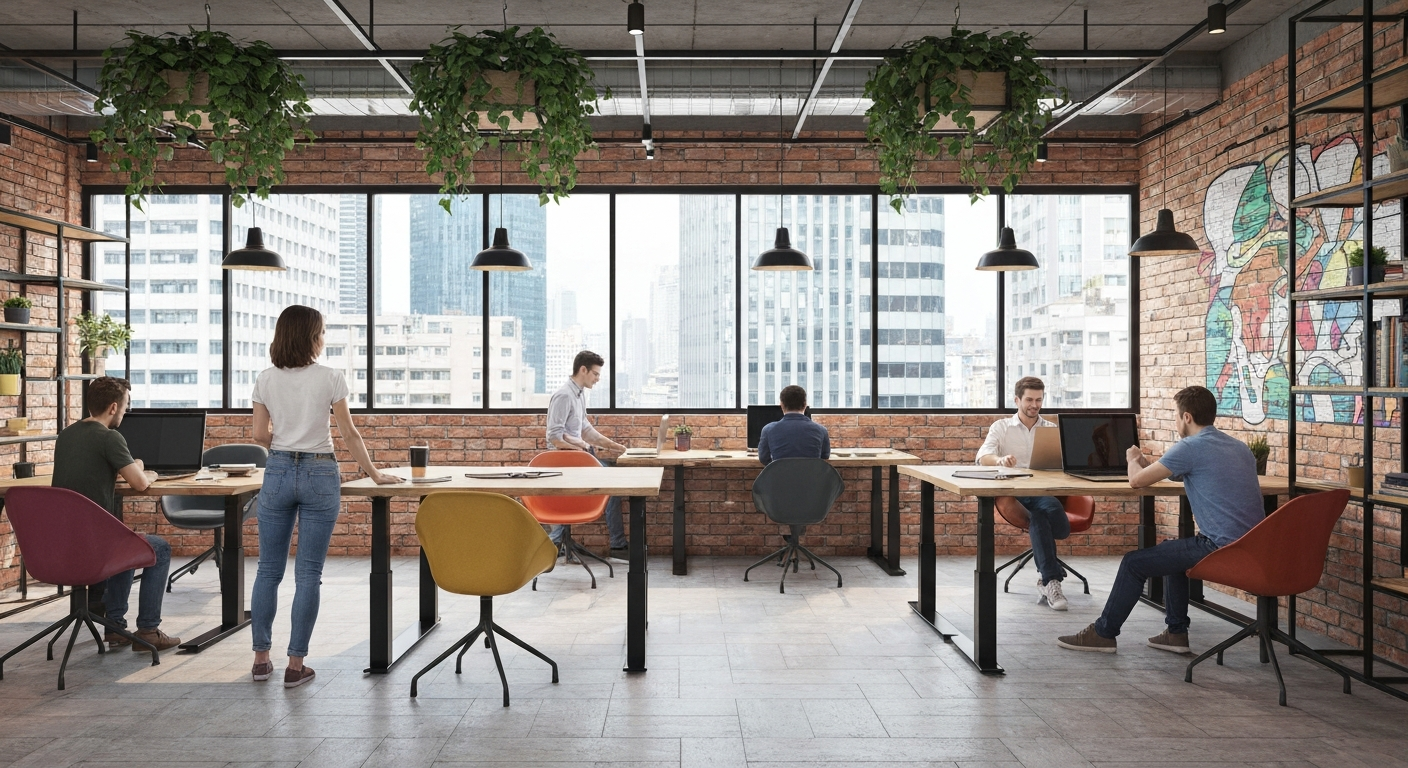
Punspace Nimman is the classic among the best coworking spaces for digital nomads in Southeast Asia. Located in the trendy Nimman district, monthly membership costs just 3,500 THB (about $98). For that you get 24/7 access, 200 Mbps internet with several backup lines and an active community from over 40 nations.
I worked there for three months in winter 2023/24 and never experienced an internet outage. The air conditioning works perfectly, which matters in Chiang Mai's muggy 95°F (35°C) in April and May. An extra bonus: the attached café area serves Thai iced coffee for 50 THB ($1.40), the best caffeine kick at that price anywhere in the world.
The downside of Punspace: in high season from November to March, the quiet rooms are often fully booked. If you arrive after 11 a.m., you sometimes end up in the louder flex area. A reservation through the app is possible but costs 200 THB extra per day.
Alternative with a focus on quiet
Alt_ChiangMai on Ratchamanka Road caters to digital nomads who need absolute silence. The entire facility is a silent zone with a strict no-talk policy. Monthly membership is 4,500 THB ($125), and for that the space guarantees you a fixed seat and access to soundproof phone booths for calls. The internet reaches 250 Mbps, and the ergonomic Herman Miller chairs justify the premium.
Medellín: South America's rising remote-work metropolis
Selina Cowork in the El Poblado district combines a hostel and a coworking space. The day pass costs 40,000 COP (about $10), the monthly membership 450,000 COP ($110). The special thing: as a hostel guest you get 50 percent off coworking access, which brings the total cost for accommodation and workspace down to about $600 a month.
The internet fluctuates between 80 and 150 Mbps, which is enough for video conferences but can get annoying with large file uploads. The community events every Wednesday evening bring different digital nomads together, and I met a photographer there with whom I later carried out a joint project in Colombia.
For more professional needs, I recommend AtomHouse on Calle 10. The high-end space costs 750,000 COP a month ($180), but offers a guaranteed 300 Mbps, professional meeting rooms with presentation technology and a curated community of experienced entrepreneurs. Fewer backpackers and more established remote workers work here, which has a positive effect on the working atmosphere.
How to find affordable coworking spaces worldwide
My strategy always starts with Coworker.com, the most comprehensive database with over 15,000 spaces worldwide. The filter function for price, Wi-Fi speed and amenities saves hours of research. Important: read the reviews from the last three months, not the average rating, because quality can change quickly.
Nomad List additionally offers community reviews from active digital nomads. The platform shows you at a glance which spaces in your destination city offer the best value. According to a February 2024 analysis by Nomad List, the average monthly cost of coworking spaces worldwide is €165 ($180), with extreme swings from €60 ($65) in Vietnam to €400 ($430) in Scandinavian capitals.
An insider tip: many spaces offer discounts for long-term bookings that aren't listed on the website. Before I arrive, I always send an email and ask about terms for three or six months. In Lisbon, I saved 40 percent this way, and in Bali at least 25 percent off the regular monthly price.
The most important selection criteria
- Wi-Fi speed of at least 100 Mbps download and 50 Mbps upload, verifiable through member reviews or a personal speed test on a trial day
- Backup internet through separate providers, crucial in countries with unstable infrastructure like Indonesia or Mexico
- Ergonomic chairs and height-adjustable desks to avoid back pain on long workdays
- Quiet zones or silent areas for focused work without constant interruptions
- Air conditioning or good ventilation, especially in tropical and subtropical destinations
- Community events or networking opportunities if social exchange matters to you
- Flexible booking options from day passes to annual contracts to preserve your travel flexibility
Coworking space membership abroad: These are the models
The classic monthly membership for a fixed desk offers predictability but costs 20 to 40 percent more than flex-desk models. In my first year as a digital nomad, I booked only fixed seats until I noticed I only really work in the space three to four days a week. Since then, I've used flex memberships and save $55 to $85 a month.
Drop-in day passes make sense for places where you only stay a few days. From a week's stay on, a weekly pass is usually worth it, averaging 30 percent cheaper than five single days. Some spaces like WeWork offer global memberships that let you use all locations worldwide. Costs start at $299 a month but only pay off if you visit at least three different cities a month.
A clever alternative is community memberships without a fixed workspace. For about $55 a month, you get access to events and networking and can use the space on a few days a month. Ideal if you mainly work from your accommodation but are looking for a connection to the local digital nomad community.
If you're staying in one place longer and need to stretch your budget, also look at options like using Workaway to save on accommodation costs and free up more budget for professional workspaces.
From Lisbon to Bangkok: My personal learnings
After three years in all kinds of coworking spaces, I've learned that the most expensive space isn't automatically the best. In a $485-a-month coworking space in Amsterdam, I had barista coffee and designer furniture, but the internet crashed daily and cost me an important client order. At the same time, a $75 space in Hanoi offered me perfect working conditions with fast internet, quiet and a helpful community.
The most important lesson: always invest in a trial day before signing up for a monthly membership. I test specifically during my main working hours, run a speed test, check the noise level at different times of day and talk to at least three other members about their experiences. These hours of research have saved me hundreds of dollars and a lot of trouble several times.
Another point: the location of the space is almost as important as the equipment. A fantastic coworking space that's a 45-minute ride from your accommodation is one you'll stop visiting daily after a week. I now deliberately look for accommodation near well-rated spaces or choose the space based on the accommodation.
Combining remote work and workation hotspots
The best coworking spaces are often in established workation hotspots, where the entire infrastructure is geared toward remote workers. In Canggu you'll find not only Dojo Bali but also dozens of cafés with solid Wi-Fi, yoga studios for balance and a community that understands and shares your lifestyle.
These ecosystems offer real added value. In Lisbon, I found a sublet apartment through coworking contacts that was $215 below market price. In Chiang Mai, a member of the space sold me his scooter, which saved me daily taxi costs. These indirect benefits don't appear on any price list but make an enormous difference in everyday life.
However, as a digital nomad who wants to work productively, you should also know the downsides. In some hotspots like Bali or Thailand, the lines between vacation and work blur so much that productivity suffers. If friends constantly invite you to surf or spontaneous beach trips tempt you, you need iron discipline. That's why I block fixed working hours and treat them like real office appointments.
Taxes and legal aspects
An often ignored topic: coworking spaces abroad don't change your tax obligations. As an Austrian citizen, I remain liable for tax in Austria as long as I have my primary residence there. Working from an office abroad doesn't automatically make you a tax resident of that country, but it can raise complex questions.
Since my second year as a nomad, I've worked with a tax advisor in Vienna who specializes in international tax questions, who costs me $650 a year but has saved me from expensive mistakes several times. Invest in professional advice before you work from abroad long term.
FAQ: Common questions about coworking spaces worldwide
How fast does the internet need to be in a good coworking space?
For normal office work, email and research, 50 Mbps download is enough. Video conferences require at least 10 Mbps upload per participant, and for daily calls I recommend 50 Mbps upload. For upload-intensive work like video editing or large file transfers, 100 Mbps symmetrical is the minimum. Always test the speed during your main working hours, not at 7 a.m. when the space is empty. Speedtest.net provides reliable measurements, so run at least three tests two hours apart.
Is a global coworking membership like WeWork Access worth it?
Only if you visit at least three different cities a month and there are WeWork locations in each city. At $299 a month, you have to use the space at least 15 days to come out cheaper than with day passes. For most digital nomads who stay in one place longer, a local membership is more economical. I tested WeWork Access for three months and found that I was effectively only in the space 8-10 days a month, with the rest going to cafés or my accommodation. The math didn't work out.
What hidden costs do coworking spaces have?
Many spaces charge extra for printing (often $0.55 to $1.10 a page), meeting room bookings beyond the included allowance ($11-32 an hour), lockers ($5.50-16 a month) and parking in downtown locations (up to $108 a month). Coffee and snacks are sometimes included, sometimes charged at café prices. Ask explicitly about all additional fees before signing a contract. In Lisbon, I once unexpectedly paid $49 for printing and meeting rooms that I thought were included.
Can I also receive business mail at coworking spaces?
Many professional spaces offer a business address and mail service for an extra fee ($16-54 a month). That's especially valuable for digital nomads without a fixed residence. Regus and WeWork have established systems, while smaller local spaces handle it differently. Important: clarify beforehand whether the address may be used for company registration or only for receiving mail. In some countries, using a coworking address as a company seat is legally problematic.
How do I find coworking spaces with a good community?
Look for organized events like lunch-and-learns, skill shares or Friday drinks in the event calendar. Spaces with active Slack or WhatsApp groups show lively communities. Read reviews on Coworker.com or Nomad List with a focus on comments about the community. Visit the space on a Friday afternoon, when social events take place, to test the atmosphere. Spaces that focus only on infrastructure fill up with headphone-wearing lone wolves. Spaces with a community focus have open common areas and regularly organize get-togethers.
Conclusion: The right coworking space makes the difference
After three years as a remote worker in coworking spaces around the world, I can say: the investment almost always pays off. The $110 to $215 a month for a membership pays for itself many times over in increased productivity, better work-life balance and valuable contacts. My most productive and creative phases never happened in a hostel room but in well-run spaces with an inspiring community.
Start with a trial day in your destination, test the internet during your working hours and talk to other members. Invest in quality rather than the cheapest provider, because a bad space costs you more in lost productivity than you save on the membership fee. And don't forget: the best coworking space is the one you actually use regularly, not the one with the prettiest Instagram photos.
For more inspiration on living and working abroad, also check out my experiences with why international experience matters for your career. If you want to finance your stay abroad, you'll find practical tips in my guide to crowdfunding your year abroad. Take the step, pack your laptop and find your perfect workspace somewhere between Bali and Barcelona.