Work and Travel Packing List: What You Really Need
Reading time: 10 minutes
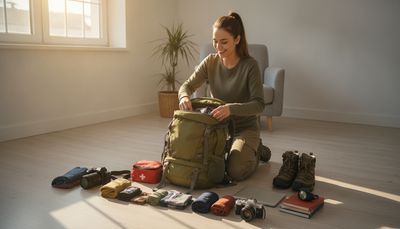
I stood at Vienna-Schwechat Airport with 50 pounds (23 kg) of luggage, convinced I'd done everything right. Three months later in New Zealand, I opened my backpack and realized: I hadn't touched half of it even once. My first Work and Travel packing list was a disaster of excess, and I still lacked essential things. Today, after five long-term trips across four continents, I know exactly what really belongs in your luggage and what's just unnecessary weight.
The biggest packing mistake? We think in scenarios instead of realities. "What if it gets cold?" leads to three extra sweaters. "What if I want to go out?" justifies shoes with heels. The truth: for several months abroad, you need less than you think, but the little you bring has to work. Here is my honest, tested packing list for Work and Travel.
The right backpack: The foundation for all your Work and Travel luggage
Forget wheeled suitcases. On a farm in Queensland or while hostel-hopping through Southeast Asia, you need a solid backpack. I swear by the Osprey Farpoint 55L system: a 40L main pack plus a 15L detachable daypack. It costs about $195, but the carrying system saved my back on multi-hour treks through Bali.
Most people massively overestimate the volume they need. A 2023 study by the German outdoor association shows that 67 percent of all backpackers travel with oversized luggage and haul around an average of 9.5 pounds (4.3 kg) of unused gear. My sweet spot: 45-55 liters. Anything above that tempts you to overfill.
You also need a compressible daypack of 15-20 liters for excursions. I use the Matador Freerain24, which folds down to the size of a palm. Ever since I spontaneously went to the Twelve Apostles from Melbourne and had to lug my entire main backpack along, the daypack has been a must in my setup. You'll find more on the right equipment in my post about the Work and Travel backpack.
Clothing and gear for long-term travel: Less really is more
This is where it gets concrete. My minimalist clothing packing list includes exactly:
- 4 T-shirts (2 merino, 2 synthetic – merino doesn't stink even after days)
- 2 long-sleeve shirts for cooler evenings and sun protection
- 1 lightweight down jacket (Uniqlo Ultra Light Down, packs down to the size of an apple)
- 1 breathable rain jacket (Gore-Tex or similar)
- 2 pairs of long pants (1 jeans, 1 quick-drying hiking pants)
- 1 pair of shorts for work and leisure
- 6 pairs of underwear, 5 pairs of socks (ExOfficio underwear dries overnight)
- 1 pair of sturdy shoes (trail runners, no heavy hiking boots)
- 1 pair of flip-flops for hostel showers
- Swimwear
This list got me through Canadian winters at 5°F (-15°C) and Australian summers at 104°F (40°C). The secret? Layering instead of specialization. When I worked on a ranch in Alberta in 2022, I wore four layers at once: merino shirt, long-sleeve, fleece midlayer and down jacket. It worked perfectly.
Tech and electronics: What actually got used
I'll be honest: the Kindle was worth its weight in gold, the Sony mirrorless camera with three lenses was complete nonsense. Today I travel with just an iPhone 14 Pro, since the camera is perfectly fine for Instagram and memories. According to a 2024 Statista survey, 78 percent of digital nomads use only smartphone photography.
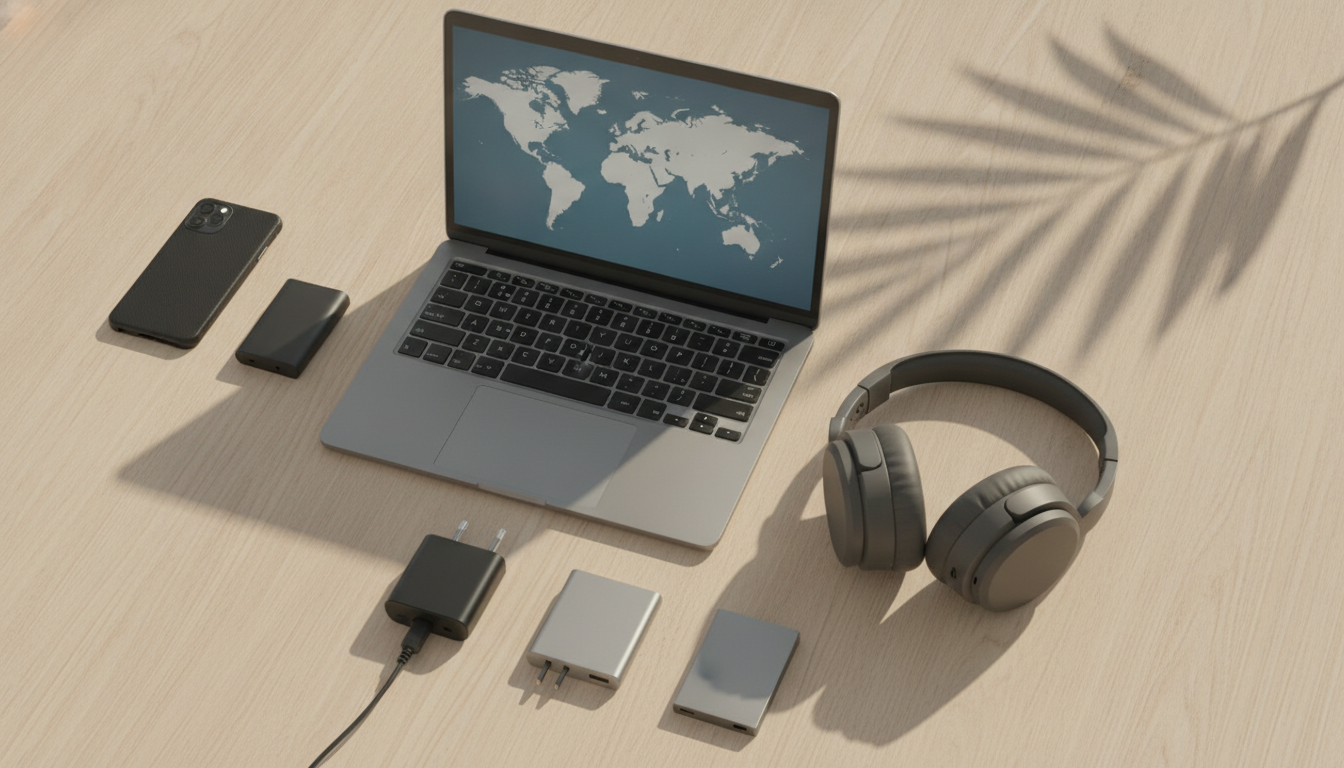
My tech essentials: laptop (MacBook Air M2, 2.7 lb or 1.24 kg), universal travel adapter with USB ports (Skross World Adapter Pro), power bank with at least 20,000 mAh, noise-canceling headphones (Sony WH-1000XM5 for long bus rides), external SSD for backups. Kindle Paperwhite for books without the weight. Total weight of this tech kit: 6.8 pounds (3.1 kg).
Don't forget: in many countries you need stable internet for remote work. In Thailand, I had a portable Wi-Fi device from Solis that works in 135 countries. It cost me $10 per gigabyte, but when the hostel Wi-Fi in Chiang Mai crashed during an important client call, it was worth every cent. If you want to work as a digital nomad, check out my recommendations for coworking spaces worldwide.
Documents and finances: The absolute minimum of paperwork
I scan all important documents and store them encrypted in the cloud. Physically with me: passport, driver's license, international birth certificate (in case you want to marry spontaneously, ha!), vaccination record, proof of insurance, one credit card and one debit card from different providers.
Pro tip from painful experience: keep cards and cash in three different places. In Buenos Aires, my backpack, including my wallet, was stolen, and I was left completely broke because everything was together. Today: one card in the backpack's hidden compartment, one on my body, cash split up. An RFID-blocking wallet protects against skimming and costs around $27.
For Work and Travel, you need specific visa documents depending on the country. The exact requirements vary widely, so find out about the Work and Travel requirements for your destination country at least three months before departure.
Hygiene and health: Compact, but complete
This is where the wheat gets separated from the chaff. Nobody needs five different creams. My setup fits in a 1-liter (quart-size) zip bag: solid soap instead of shower gel (Dr. Bronner's for body and hair), stick deodorant, toothbrush and toothpaste, nail scissors, tweezers, small sunscreen (buying more on location is cheaper), insect repellent with 50 percent DEET.
Don't forget the travel first-aid kit: painkillers, anti-diarrhea medicine (Imodium saved me in India), electrolyte powder, blister plasters, personal medication for three months plus a reserve. Antibiotic cream for small wounds. Condoms in sufficient quantity, as the quality in some countries is questionable.
First aid and practical little things
A compact first-aid kit is a must. Mine weighs 6.3 ounces (180 g) and contains: sterile compresses, bandages in various sizes, an elastic bandage, disinfectant, wound closure strips, tweezers, safety pins. Plus: a water filter or purification tablets (LifeStraw Flex), a padlock for the hostel locker, zip ties and duct tape (fixes everything from backpack tears to broken flip-flops), a headlamp with a red light mode for navigating hostels at night.
Clothesline with built-in clips, a quick-dry microfiber towel (a regular towel is a waste of space), earplugs and a sleep mask for dorm rooms, a reusable shopping bag, a foldable water bottle.
What I NO LONGER pack: Lessons learned in kilograms
After five long-term trips, I know what is ballast. These things stayed unused and got cut: paper travel guides (apps are more current), more than two pairs of shoes, fancy evening wear (borrowed or bought on location if needed), travel hair dryer (hotels have them, in hostels you don't need one), thick notebook (your phone is enough), travel pillow (a rolled-up jacket works), sleeping bag except for camping trips.
The biggest waste of space: "what-if" items. The three books for long flights (Kindle!), the second pair of sneakers (in case the first break), the spare adapter (one is enough). According to a 2023 survey by the European Backpacker Association, 71 percent of all first-time backpackers bring items they never use, an average of 8.4 pounds (3.8 kg) per person.
Packing technique: How to turn 50 liters into 70 liters
Roll instead of fold. It sounds banal but saves 30 percent of the space. I roll each piece of clothing individually, tight like a cigar. Compression bags for jackets and sleeping bag. Stuff shoes with socks and small items. Heavy things at the bottom (close to your back), light things on top. Frequently needed items within reach in the top compartment.
Packing cubes are a game changer. I use the Eagle Creek Pack-It system: one cube for tops, one for bottoms, one for underwear, one for tech accessories, one for hygiene. It sounds overdone, but when you're looking for your toothbrush in the dark of a hostel room at 5 a.m., you understand the value of organization.
Adapting to climate zones: A packing list for every case

The question "how much luggage for Work and Travel" depends heavily on your route. For tropical climates (Southeast Asia, Latin America, northern Australia), you need lighter, breathable clothing and more sun protection. For temperate or cool zones (Canada, New Zealand winter, Scandinavia), the midlayer becomes more important.
My trick: the base packing list stays the same, I only swap the midlayer. For warm countries I take a thin fleece, for cold regions a thicker midlayer plus a hat and gloves. I often buy these on location and leave them there when I move on. In a second-hand shop in Vancouver, I snagged a Patagonia fleece jacket for 15 Canadian dollars that stayed with me for three months before I passed it on to the next traveler.
Spontaneous additions on location
Not everything has to come from home. Sunscreen is cheaper and better in Australia, you can buy mosquito nets in Southeast Asia for $3 instead of $22 at home, and work clothes for farm jobs are often provided by the employer or available at the local Kmart. When I worked on a fruit plantation in Mildura, half the crew wore clothes from the same local shop – practical and cheap.
Important: leave space in your backpack for souvenirs and spontaneous purchases. I always plan on 20 percent free volume. That gives me flexibility and I don't have to constantly throw things away or ship them home. Shipping is expensive: a package from Australia to Austria cost me a hefty $97 with DHL in 2022.
Digital nomads and remote work: Extra equipment
If you want to work on the road, a few essentials for Work and Travel get added. External keyboard and mouse (for longer work on a laptop), laptop stand (foldable, 7 oz or 200 g), a second monitor is a luxury and stays at home, but a tablet can serve as a second screen (Sidecar with an iPad works great).
Stable internet is more critical than hardware. I test every hostel and every coworking space with Speedtest.net before I book. My minimum: 25 Mbps download for video conferences. At Outpost Coworking in Bali, I had a steady 100 Mbps, a dream for remote work. You'll find the best tips for working remotely on the road in my article on finding jobs on the spot.
Frequently asked questions about my Work and Travel packing list
What do I absolutely need for Work and Travel?
The absolute essentials are: a functional backpack (45-55L), weatherproof layered clothing (4 shirts, 2 pants, 1 jacket), sturdy shoes, travel documents and proof of insurance, a laptop if you work remotely, basic toiletries and a travel first-aid kit. Everything else you can buy on the road or improvise. I lived in Thailand for three months with exactly these basics and missed nothing.
How much luggage is optimal for Work and Travel?
The ideal total weight is between 26 and 33 pounds (12 and 15 kg), including the backpack. More than 40 pounds (18 kg) becomes torture on longer walks. A 2024 study by the International Backpacker Association shows that travelers with under 33 pounds (15 kg) of luggage are significantly happier and have fewer health complaints. I now travel with exactly 30 pounds (13.5 kg) and feel extremely mobile.
How long does one set of clothes last on a long-term trip?
With four T-shirts and two pairs of pants, you can easily get by for several months. You wash every 3-4 days, either at a hostel laundry or by hand. Quick-drying materials like merino or synthetics dry overnight. With my minimalist packing list, I traveled Southeast Asia for eight months without having to buy a single item, except socks after six months of constant use.
Do I need a sleeping bag for Work and Travel?
In 95 percent of cases, no. Hostels and accommodations provide bedding, and farm work often does too. A sleeping bag liner (a thin inner sheet) is enough for hygiene-conscious people and weighs only 7 ounces (200 g). You only need a proper sleeping bag for camping trips or nights outdoors. I carried one for three years and used it exactly twice – tossed it, never missed it.
Can I buy gear along the way or does everything have to come from home?
You can buy almost everything along the way, often cheaper than at home. Sunscreen, toiletries, work clothes, even electronics are cheaper in many countries (Southeast Asia, USA). Only specialized outdoor gear and prescription medication should you bring from Austria. In Melbourne, I bought a complete set of work clothes for 40 Australian dollars that would have cost twice as much in Vienna. The rule: only bring what you absolutely need in the first two weeks.
My personal conclusion after years of experimenting
The perfect Work and Travel packing list doesn't exist, but there is a perfect packing list for YOU. Mine developed over years, through trial and error, through painful moments (paying for 6.6 extra pounds, or 3 kg, at the airport, back pain after a 3-mile walk) and through happy accidents (the merino shirts were a gift, and today I'd never travel without them).
The most important lesson: less is not just more, less is freedom. Every pound less means more mobility, less stress, fewer "Do I really have to lug this around?" moments. I remember an encounter in a hostel in Hanoi, where a German backpacker arrived with 77 pounds (35 kg) of luggage and literally didn't know where to put it. His backpack didn't fit in the locker, he couldn't take spontaneous excursions, and every transfer became a nightmare.
Start with my list as a base, cross off what you don't need, add your personal must-haves. After two weeks on the road, you'll know exactly what's missing and what's superfluous. Then comes the liberating moment: you send a package home or give things away to other travelers. And suddenly you feel lighter in every respect.
Pack smart, travel light and tell me later what worked for you. Even after five years, I'm still learning and continually optimizing my gear. The journey is the destination, and a light backpack makes that journey immeasurably more enjoyable.