Finding Jobs on the Spot: My On-Location Strategy

Reading time: 10 minutes
I'm standing in Melbourne outside a café called "The Hardware Société" on Hardware Lane. It's 73°F (23°C), my backpack is half empty, and my bank account shows 487 Australian dollars. In three weeks my hostel booking runs out. That's exactly the moment I learned how to find jobs on location without months of preparation. Spoiler: it works better than any online application sent from Austria.
Spontaneous job hunting in your destination country isn't a backup plan, it's often the most successful strategy. According to a study by the German Academic Exchange Service (DAAD) from 2023, 63% of Work and Travel participants find their first job right on location, not through pre-booked programs. The reason is simple: employers want to see who they're dealing with before they hire someone who might never show up.
Why searching on location is often more successful than applying online
When I arrived in Byron Bay in New South Wales, I had spent two weeks sending out online applications without success. Zero replies. Then I went in person to eight hostels and three surf schools, all within about a mile (2 km) of Jonson Street. At my fifth stop, the "Byron Bay Surf School" right at Main Beach, I had a job as a surfboard prep assistant after a ten-minute conversation. The manager told me later: "I don't answer emails from people who aren't even here yet."
This experience matches a 2024 analysis by Workaway showing that in-person introductions have a 4.7 times higher success rate than digital applications for hostel and hospitality jobs. You prove your motivation through your physical presence, and that's exactly what counts when finding a job spontaneously abroad.
My proven strategies for a successful job search right on location in your destination country
The most effective method is so-called "door-knocking," meaning going directly from one potential employer to the next. It sounds old-fashioned, but it works brilliantly, especially in Australia, New Zealand and Canada. In every city, I worked out a fixed route: mornings between 10 and 11 for cafés (after the morning rush, before lunch), afternoons from 2 p.m. for hostels and tour operators.
In Cairns, I visited 22 locations within three days. My route started at the Esplanade and ran along Grafton Street to Abbott Street. Specifically: Gilligan's Backpackers, Mad Monkey Hostel, Cairns Central YHA, then on to reef tour operators like "Reef Magic Cruises" and "Sunlover Reef Cruises". I got three job offers, two of them on the same day.
The right timing and the right approach
Timing is everything. Ask about hospitality jobs between lunch and dinner, so 2 to 4 p.m. Hostel jobs are best on Tuesday or Wednesday mornings, when managers have time and the weekend chaos is over. For farm jobs: show up at the farm in person on Monday morning between 7 and 8 a.m., don't call.
My standard pitch takes 60 seconds at most: "Hi, I'm Laura from Austria, I'm in town for the next three months and I'm looking for work. I've got experience in hospitality and I can start immediately. Are you hiring or do you know someone who is?" Short, direct, no life story. In Wellington, this pitch got me a three-day trial shift at "Prefab Café" on Jessie Street, which turned into a two-month job.
Using bulletin boards, Facebook groups and local networks
Digital bulletin boards are worth their weight in gold, but only the local ones. The Facebook group "Melbourne Backpackers Jobs & Accommodation" has 47,000 members, and 15 to 20 jobs are posted there every day. That's where I found my job at a vintage store in Fitzroy, AUD 22 an hour, three days a week. The job was posted at 8 a.m., I replied at 8:12 a.m. and was the first.
Physical bulletin boards in hostels and supermarkets like Coles or Woolworths work too. In Hobart, I spotted a flyer for cherry picking in Huonville on a board at "The Nook Backpackers" on Argyle Street. AUD 28 an hour, accommodation included. The flyer had been up for two days and nobody had called. I got in touch right away and had the job.
- Facebook groups: search for "[city] + backpackers jobs," and post in groups with more than 5,000 members
- Gumtree and local classifieds sites: check daily, before 9 a.m. and after 5 p.m., since that's when most jobs get posted
- Hostel networks: ask at the front desk about internal job boards, since many hostels have partnerships with local employers
- WhatsApp groups: in larger backpacker hubs there are often unofficial groups, and you get access through other travelers at the hostel
Personal networking: How conversations got me jobs
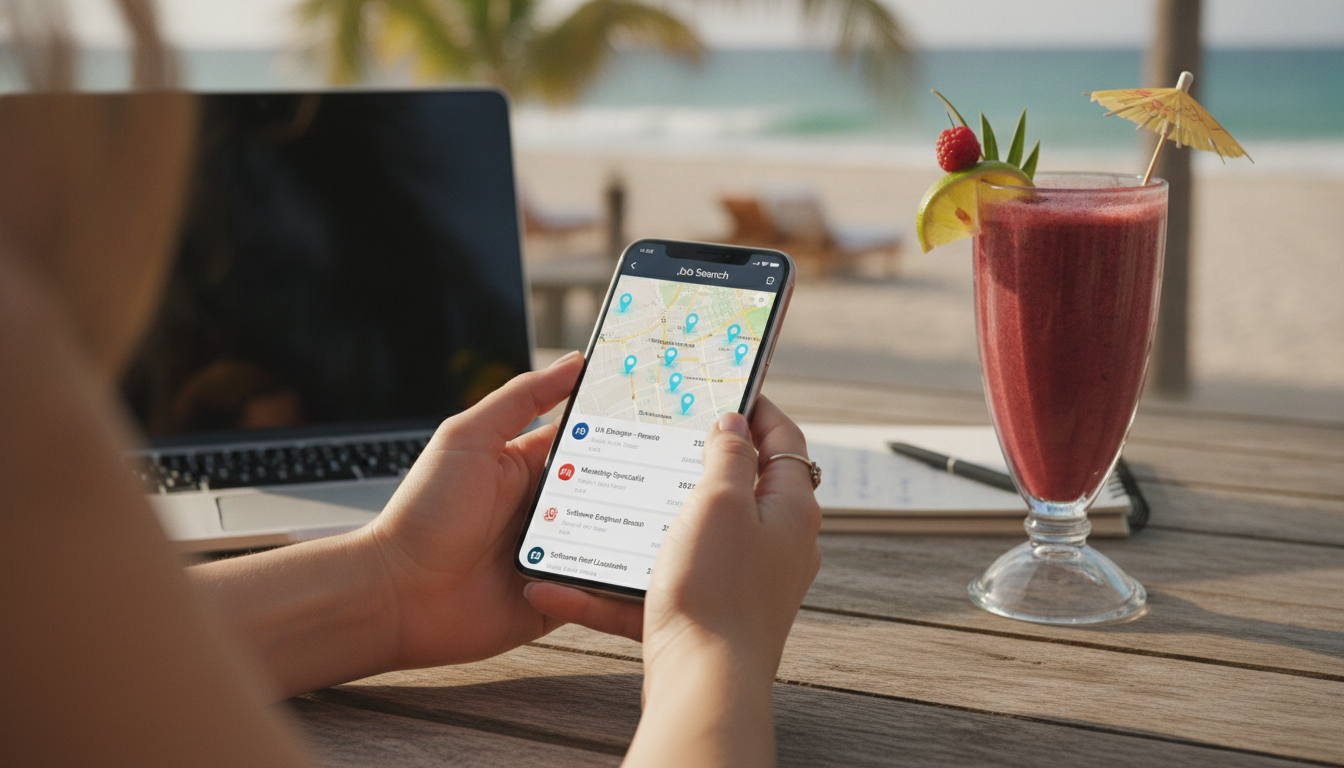
My best job in Canada came from a chance conversation in a laundry room. I was in Banff, Alberta, at the "Samesun Hostel" and was chatting with a German traveler about job hunting. He mentioned that the "Banff Gondola" on Sulphur Mountain was desperately looking for people for the ticket counter. Two hours later I was standing there talking to the manager, and three days later I had my first day of work. CAD 19.50 an hour plus free gondola rides after work.
Networking also means being visible and approachable. I got into the habit of sitting in hostel common rooms instead of the dorm, joining free walking tours and showing up at Facebook events. At a free BBQ night at "Base Backpackers" in Sydney, I met an Australian woman who worked at a surf shop in Bondi. A week later, I had a job there for the summer season.
The trial shift as a door opener
Many employers offer trial shifts, paid or unpaid trial days of work. That's your chance. In New Zealand, I did an unpaid four-hour trial at "Fergburger" in Queenstown. Hard work, extreme stress, but I pushed through and signed a contract at the end of the day. The trick: be faster and friendlier than expected, ask proactively for tasks and show initiative.
According to a 2023 survey by the New Zealand Hospitality Association, 71% of trial shifts are turned into permanent jobs if the applicant shows up on time, follows instructions without asking again and shows teamwork. Those are measurable criteria, not soft skills.
Which jobs are easiest to find on location
Hospitality and tourism are the low-hanging fruit. Cafés, bars, hostels, tour operators, surf schools: they all have high turnover and constantly need new people. In Queensland, I saw some hostels post new positions every week. "Nomads Noosa" on Hastings Street is practically always looking for housekeeping and front desk staff.
Farm work is seasonal, but if you're in the right place at the right time, you'll find something within days. The strawberry season in Queensland runs from June to October, the apple harvest in New Zealand from February to May. I was in Motueka, in the Tasman region, in March and started on an apple orchard called "Kono NZ" on my second day. NZD 25 an hour, with pay based on the number of bins picked.
You can also find spontaneous opportunities through platforms like Workaway, especially if you're already in the country and available at short notice. In my Workaway review, I wrote in detail about how I traded work for free accommodation.
Legal matters and visas: What to keep in mind on location
Nothing works without the right visa. In Australia you need a Working Holiday visa (Subclass 417), in Canada an International Experience Canada (IEC) permit, in New Zealand a Working Holiday Visa. You can't apply for these visas spontaneously on location, you have to take care of that beforehand. But with these visas, the job search itself is completely legal and straightforward.
Make sure your employer hires you legally. In Australia, the minimum wage according to the Fair Work Ombudsman is currently AUD 23.23 per hour (as of 2024). If someone offers you less, that's illegal. At a café in Perth, I was offered AUD 15 cash-in-hand. I declined and left. Two weeks later the place was inspected by Fair Work.
You need a Tax File Number (TFN) in Australia or an IRD number in New Zealand for legal employment. You can apply for the TFN online, and it takes 10 to 28 days. I applied right after arriving and received it by mail at the hostel after two weeks. Without a TFN you pay 47% tax, with a TFN only 15% on the first AUD 45,000.
Practical tips: Resume, presentation and first steps

Your resume should fit on one A4 page (one page), period. No two pages, no detailed rundown of your high school diploma. What matters: contact details (an Australian mobile number!), relevant work experience, visa status ("Working Holiday Visa valid until DD/MM/YYYY"), references. I designed my resume in Canva, clean and easy to scan, and saved it as a PDF on my phone. That way I could email it or print it at any time.
Presentation is everything. Clean clothes, a neat appearance, a smile, eye contact. It sounds banal, but I've seen backpackers ask hotels for jobs in flip-flops and ripped shirts. Result: no chance. I always had a "job-hunting outfit" with me: a clean T-shirt, dark jeans, sturdy shoes. In that outfit I got 90% of my jobs.
The first steps after arriving in a new city: buy a SIM card (in Australia: Telstra or Optus, AUD 30 for 28 days), get a local phone number, book an inexpensive hostel in a good location (central, so you can get everywhere quickly), and then get started immediately. No "let me settle in first," no "I'll have a look around the city." The jobs go to whoever gets there first.
Frequently asked questions about spontaneous job hunting on location
How long does it take to find a job spontaneously on location?
In my experience: between three days and two weeks, depending on the season, location and your flexibility. In Melbourne it took me five days, in Byron Bay two. If you're flexible about job type and working hours, you'll find something faster. According to a 2023 study by Tourism Australia, 54% of working holiday makers find a job within the first week after arriving in a city if they actively spend 4 to 6 hours a day on the job search.
Do I need work experience to find jobs spontaneously on location?
It depends on the job. For hospitality, housekeeping, farm work or simple retail jobs, you don't need any special prior experience. On-the-job training is standard. For barista positions in trendy cafés or upscale restaurants, you do. I had zero barista experience and still worked in three cafés because I showed a willingness to learn during the trial shift. For specialized jobs like dive instructor or ski instructor, you obviously need the right certifications.
Which cities are best for a spontaneous job search?
Tourism hotspots with a high density of backpackers are ideal. In Australia: Sydney (Bondi, Manly), Melbourne (St Kilda, CBD), Cairns, Byron Bay, Noosa. In New Zealand: Auckland (City and Viaduct), Queenstown, Wellington. In Canada: Banff, Whistler, Toronto (especially in summer). These places have consistently high demand for flexible workers. According to a 2024 analysis by Seek Australia, an average of 320 hospitality jobs are advertised in Cairns each month, and 180 in Byron Bay.
What do I do if I still haven't found a job after two weeks?
Widen your radius and lower your expectations. If you can't find a barista position in Sydney, apply as a dishwasher or kitchen hand. If the city is too competitive, move to a smaller town or a rural region. After ten unsuccessful days in Brisbane, I drove to Noosa, 87 miles (140 km) to the north, and had a job at a surf shop within two days. Sometimes a change of location is the solution, not more applications in the same place.
Can I find jobs on location even without perfect English?
Yes, definitely. Basic English is enough for many jobs: housekeeping, farm work, kitchen help, warehouse work. I've met French and German backpackers who barely spoke English and still worked on farms or in hostels. For front desk, waitressing or customer service you need better English, but you learn that on the job extremely fast, too. After three weeks in a café in Melbourne, my English was twice as good as after a year of school.
My conclusion: Why spontaneous job hunting was the best decision
In a year and a half, I had seven different jobs in three countries, and I didn't organize a single one from Austria. Every single job came through personal contact, showing up in person or reacting quickly to local offers. Spontaneous job hunting right on location in the destination country didn't just bring me jobs, but also self-confidence, local friendships and a real sense of how the job market abroad works.
If you're thinking about how to finance your gap year abroad, also check out my articles on earning money for a gap year abroad and scholarships for your year abroad. But believe me: you won't find the best jobs from home, but with both feet on the ground in your destination country, a printed resume in your hand and the willingness to just get started.