Work and Travel in Ireland: My Months on the Emerald Isle
Reading time: 9 minutes
Rain hammers against the window of the bus from Dublin to Galway as I pull off my soaked hiking boots. Work and Travel in Ireland means one thing above all: making friends with the weather. I spent four months on the Emerald Isle, between Guinness-pouring nights in Temple Bar and ice-cold morning shifts on an organic farm in County Clare. What did I learn? That Work and Travel in Ireland experiences are so much more than postcard clichés.
As an EU citizen from Austria, I needed neither a visa nor complicated work permits. I landed in September with €2,800 (about $3,000) in savings, an overstuffed backpack and no concrete plan whatsoever. Three days later I was standing behind the counter of a café in Smithfield, Dublin 7, selling flat whites to stressed commuters. That's how fast it can happen.
Why Ireland is perfect for Work and Travel
Living in Ireland as a Work and Traveller has one decisive advantage: you can get started right away. While friends of mine had to apply for Working Holiday visas for months for Australia or New Zealand, I could simply enter and work as an Austrian. Free movement within the EU makes Ireland one of the least complicated destinations for German-speaking backpackers.
The job markets in Dublin, Cork and Galway are hungry for workers, especially in hospitality and tourism. According to the Central Statistics Office Ireland, the unemployment rate in October 2023 was just 4.1 percent. That means anyone motivated will find work. In my four months, I had three different jobs without ever searching for longer than five days.
Finding jobs in Ireland: My strategy
I got my first job at the café through plain old door-knocking. On a Tuesday morning, I walked through Smithfield and the area around Capel Street, dropped off my resume at eight cafés and was invited for an interview at three. The trial shift the next day was a formality. Hourly pay: €11.30 (about $12.20), the legal minimum wage in Ireland at the time.
Which jobs in Ireland are realistic for backpackers? Here's my list, based on my own experience and that of my hostel roommates:
- Barista or server in cafés and restaurants (€11.30-14 an hour, about $12-15, plus tips)
- Pub staff, especially on weekends (€12-15 an hour, about $13-16, tips vary)
- Farm work on organic farms through Workaway or WWOOF (free accommodation, meals)
- Hostel reception or housekeeping (€11.30-13 an hour, about $12-14, sometimes free accommodation)
- Seasonal work at tourist attractions like the Cliffs of Moher (April-October, approx. €12 an hour, about $13)
After six weeks at the café, I wanted out of Dublin. The city is expensive, loud and sometimes feels more like London than Ireland. Through the Workaway platform, I found an organic farm near Ennis, County Clare. I worked there for four weeks: harvesting vegetables, feeding sheep, repairing fences. No money, but free accommodation, three meals a day and the Irish landscape right outside the door. You can read more about traveling for free through volunteer work in my Workaway review.
Experiencing pub culture: More than just Guinness
Getting pub jobs in Ireland as an Austrian is easier than you'd think, especially if you can rely on your German skills. Many pubs in Dublin specifically look for multilingual staff for the high tourist season. I got my third job at a pub in Galway, Tig Cóilí on Mainguard Street, known for traditional live music every night.
The work was hard: starting Friday evening at 7 p.m., washing glasses until 2 a.m., pouring Guinness (yes, it really takes 119.5 seconds for the perfect pint), calming drunk tourists. But the atmosphere? Priceless. When the fiddle kicks in at midnight and the whole pub sings along to "The Wild Rover," you understand why Ireland is famous for its pub culture.
A word about reality: Ireland has an alcohol problem. According to a 2022 report by the Health Research Board, average alcohol consumption is 10.8 liters of pure alcohol per person per year. That's well above the EU average of 9.5 liters. You see it in the pubs every night. I learned that pub culture doesn't mean drinking along every evening. Setting limits is okay, even if Irish humor can be rough at times.
Work and Travel Ireland experience report: The downsides

Ireland is expensive. According to the Mercer Cost of Living Survey 2023, Dublin is among the 50 most expensive cities in the world. A bed in a shared dorm costs €25-35 (about $27-38) a night, a room in a shared apartment in Dublin at least €600-800 (about $650-865) a month. A bus ticket within Dublin: €2.50 (about $2.70). A sandwich at the supermarket: €5 (about $5.40). My €2,800 in starting capital was used up after six weeks, despite having a job.
The weather is another challenge. It rains. Constantly. According to Met Éireann, the Irish weather service, it rains on average 128 days a year in Dublin and as many as 158 days in Galway. In October in Cork, I didn't see a single dry day for three weeks. Invest in a proper rain jacket, not a cheap tourist version from the souvenir shop.
Finding housing is a nightmare, especially in Dublin. The rental market is completely overheated. I searched for shared rooms on Daft.ie (Ireland's biggest property platform) and wrote to 40 listings. Got two replies. In the end, I stayed in hostels for seven weeks before finding an overpriced room in Rathmines through Facebook groups like "Dublin Rooms for Rent."
What is life as a Work and Traveller in Ireland really like?
Honestly? It's a mix of magical moments and frustrating everyday life. The Irish are incredibly friendly, but also reserved. Building real friendships takes time. Small talk is an art form, deeper conversations are rarer. I built the best connections with other travelers, not with locals.
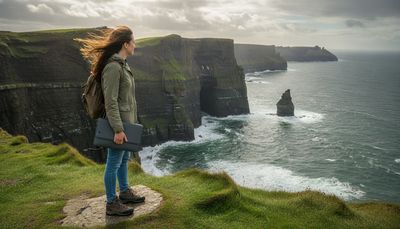
The nature is breathtaking. On days off, I worked my way along the Wild Atlantic Way: the Cliffs of Moher at sunset, the Slieve League Cliffs in Donegal (Europe's highest sea cliffs at 601 meters, about 1,970 feet), the Ring of Kerry. A bus ticket from Dublin to Galway costs from €15 (about $16) with Bus Éireann if you book early. Hitchhiking works well too, especially in rural areas.
Socially, it can get lonely, especially in the first weeks. If you've just arrived and don't have a job yet, the days can get long. I recommend joining Meetup groups right away or staying in hostels with common rooms. The Generator Hostel in Dublin (Smithfield) and the Sleepzone Hostel in Galway have active communities where you can meet people quickly.
If you notice that constantly changing locations and job hunting is wearing you out, that's normal. I had a small slump myself after three months. You can learn more about this phenomenon in my article on workation burnout and warning signs.
Practical tips for Work and Travel in Ireland
Open an Irish bank account right away. Almost nothing works without a PPS Number (Personal Public Service Number, the Irish tax number). You get it at your local Intreo Centre or from the Department of Social Protection. It takes 2-4 weeks, so bring your passport and proof of address. Most employers only pay into Irish accounts. I opened an account at Bank of Ireland, free for students under 25.
You don't need a phone contract. I had a prepaid SIM from Three Ireland, €20 (about $22) for 4 weeks with unlimited data. It works everywhere except the most remote corners of Donegal. Important: in Ireland you often need an Irish phone number for job ads and apartment searches.
Budget planning: expect at least €1,200-1,500 (about $1,300-1,620) a month if you live in Dublin. In smaller cities like Galway, Cork or Limerick, it's more like €900-1,200 (about $970-1,300). Jobs pay between €11.30 and €15 an hour, and 120-140 hours a month (30-35 hours a week) is realistic. That puts you at €1,350-2,100 gross (about $1,460-2,270). After taxes, about €1,200-1,800 (about $1,300-1,950) is left.
Transport: the Leap Card is your friend in Dublin, Cork and Galway. A rechargeable chip card for buses, trams and trains. It costs a €5 deposit and saves up to 30 percent compared to single tickets. For long-distance trips, use Bus Éireann or private providers like GoBus. Always book tickets online in advance, it's cheaper.
If you don't want to just look for jobs spontaneously on location, you can also plan strategically in advance. You'll find my tips on that in the article about finding jobs on the spot.
Ireland visa: What you need to know as an EU citizen
As an Austrian, German or Swiss citizen (EFTA agreement), you don't need a visa for Ireland. You can enter, live and work without limits. The only requirement: a valid passport or ID card. But note that after three months you should register officially if you have a permanent address. It's not mandatory, but it makes applying for the PPS Number and opening a bank account easier.
For non-EU citizens (e.g. from the USA, Canada, Australia), there is the Working Holiday Authorisation Programme. It lets you work and travel in Ireland for up to 12 months. The application goes through the Irish embassy in your home country, cost: €60 (about $65). Requirements: 18-30 years old (up to 35 for Canada), sufficient financial means (about €3,000, or $3,250), health insurance.
My conclusion: Would I do it again?
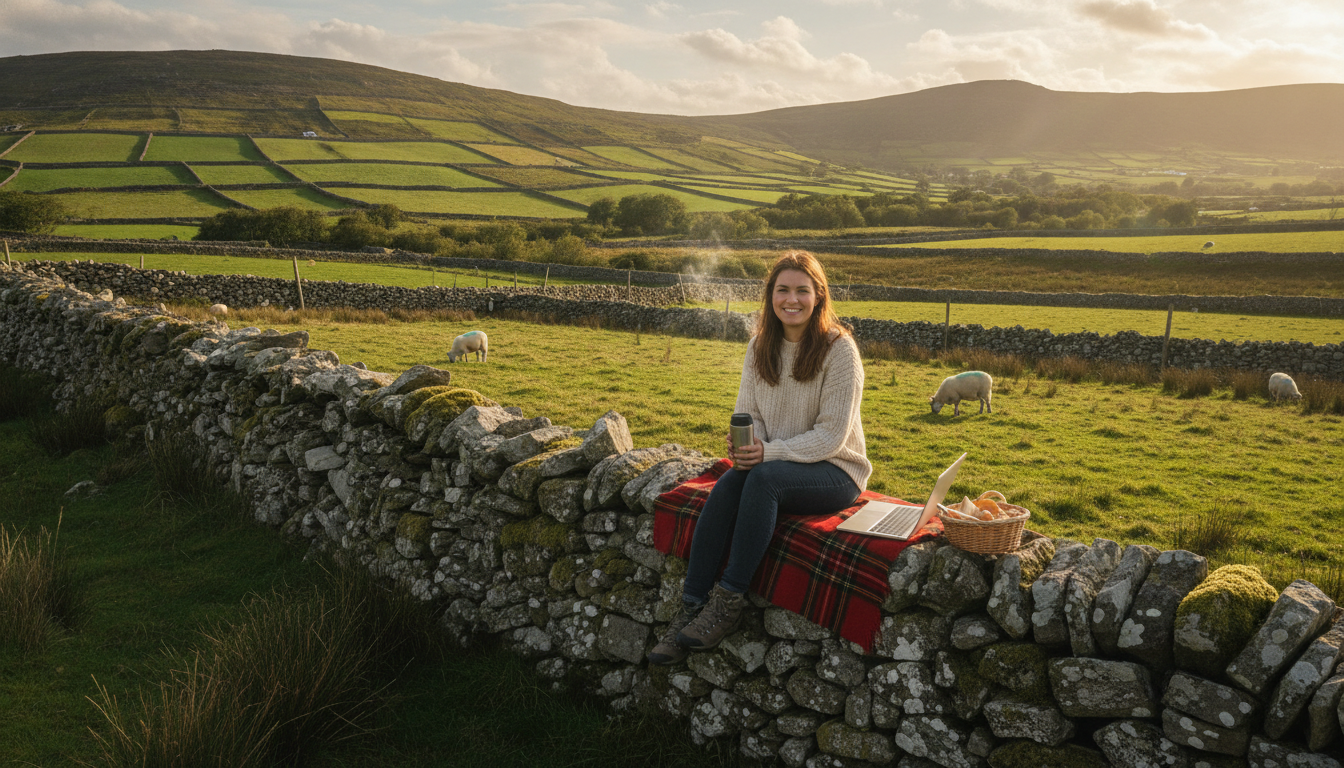
Yes, but with different expectations. Work and Travel in Ireland is not an Instagram adventure with sunsets and happy sheep. It's wet, expensive and sometimes lonely. But it's also real. The evenings in the pub, when the rain rages outside and someone tells a story inside. The morning shifts on the farm, when fog hangs over the hills. The bus rides along the coast, where the sea is gray and wild.
If you go to Ireland, go with a cushion of at least €3,000 (about $3,250) and the willingness to embrace the unplannable. Don't go for the photos, go for the experience. And pack a damn good rain jacket.
FAQ: Common questions about Work and Travel in Ireland
How much money do I need for Work and Travel in Ireland?
At least €3,000 (about $3,250) as starting capital, better €4,000 (about $4,300). The costs for accommodation and living are high, especially in the first weeks until you have a job. Expect expenses of €1,200-1,500 (about $1,300-1,620) a month in Dublin, €900-1,200 (about $970-1,300) in smaller cities.
What jobs can I do in Ireland as a backpacker?
Most jobs are in hospitality, tourism and agriculture. Cafés, pubs, hostels and farms are constantly looking for temporary help. Expect hourly wages between €11.30 and €15 (about $12.20-16.20), sometimes with tips or free accommodation for farm work.
Do I need a visa for Work and Travel in Ireland?
Not as an EU citizen. You can enter and work freely. Non-EU citizens need a Working Holiday Authorisation, which is valid for up to 12 months and costs €60 (about $65).
What is the weather in Ireland really like?
Rainy. It rains 128 days a year in Dublin and as many as 158 days in Galway. Temperatures are mild (41-68°F, or 5-20°C), but the rain and wind make it feel colder. Pack layers and waterproof clothing.
How do I find accommodation in Ireland?
The housing market is difficult, especially in Dublin. Use Daft.ie, Facebook groups like "Dublin Rooms for Rent" or stay in hostels at first. Expect €600-800 (about $650-865) for a room in a shared apartment in Dublin, €400-600 (about $430-650) in smaller cities. Be patient and flexible.