Georgia as a Digital Nomad: My 3 Months in Tbilisi

Reading time: 9 minutes
I'm sitting in a café on Agmashenebeli Avenue, with a khachapuri in front of me for about $2.75, the Wi-Fi is faster than in my Vienna apartment, and outside the snow-capped peaks of the Caucasus tower into the sky. Georgia for digital nomads – for a long time this combination was an insider tip I only shared with a few people. After three months in Tbilisi, I can say: this city is an underrated paradise for remote workers, and I'll tell you exactly why.
Before I landed in Tbilisi in February 2024, I had asked myself three questions: Does the internet really work as well as people claim? What is it like living in Georgia as a woman on her own? And can I live comfortably on $1,100 a month? Spoiler: the answers surprised even me.
Visa and residence: 365 days without paperwork
The first thing that makes Georgia so attractive for digital nomads is visa-free entry. As an Austrian citizen, I was allowed to stay a whole year without a visa – no applications, no fees, just showing my passport on arrival. According to the Georgian Ministry of Foreign Affairs, this rule applies to more than 90 countries, including all EU states. According to a March 2024 analysis by the Georgian Journal, this generous visa policy is a deliberate strategy to attract remote workers and digital nomads.
I only had to make sure my passport was still valid for at least six months. International health insurance wasn't mandatory for entry, but I took one out anyway – for about $50 a month I was fully covered. In my first month in Tbilisi, I met Sarah from Chicago, who had arrived without insurance and then ended up in the hospital with food poisoning. The bill: $375 for two days. Ever since, she preaches to every nomad she meets how important insurance is.
Internet and coworking: Faster than expected
I spent my first week in an Airbnb in Vera, a central neighborhood north of the old town. The Wi-Fi there delivered 85 Mbps download – more than enough for video calls and cloud work. According to the Ookla Speedtest Global Index, Georgia's average mobile internet speed in January 2024 was 46.89 Mbps, which is in the upper middle range internationally.
For a local SIM card, I paid Magti 15 GEL (about $5.50) for 10 GB of data per month. Network coverage in Tbilisi is excellent, and I had full reception even in the metro. I often used my mobile data as a backup when working in cafés – which was one of my favorite activities in Tbilisi anyway.
The coworking scene in Tbilisi is lively and growing. My regular spot was Impact Hub Tbilisi at 33 Pekini Avenue. For 150 GEL (about $55) a month, I had a flex desk, unlimited coffee and access to a community of about 40 other digital nomads from around the world. On Thursdays there was always a community lunch, where I met people from France, the Netherlands and even Japan.
A cheaper alternative is Fabrika, a former Soviet sewing factory that is now a hipster hub with hostels, bars, studios and also coworking areas. A day pass cost me 20 GEL (about $7.15), and the atmosphere was creative and relaxed. However, it was often crowded at midday, and I sometimes had to fight for a seat.
Cost of living: Comfort for under $1,100
For me, living in Tbilisi as a digital nomad means: quality without financial worries. My fixed monthly costs looked like this: $500 for a furnished one-bedroom apartment in Vera (485 square feet, balcony with a mountain view), $55 for coworking, $130 for groceries, $90 for restaurants and $55 for public transport and taxis. In total I came to about $1,000, and I really didn't skimp on anything.
Food prices are a dream: a kilogram (2.2 lb) of tomatoes cost about 2 GEL ($0.70) at the Dezerter Bazaar, a loaf of fresh bread 1.50 GEL ($0.55), and I paid from 10 GEL ($3.60) for a bottle of Georgian wine. At restaurants like Keto and Kote in the old town, I got a three-course meal with wine for 35 GEL (about $12.65).
Public transportation is dirt cheap: a metro ride cost 0.50 GEL (about $0.18), and I bought a rechargeable Metromoney card that I could also use on buses. Taxis through the Bolt app were cheap too – a 15-minute ride across the city rarely cost more than 8 GEL (about $2.90).
Community and social life: Surprisingly international
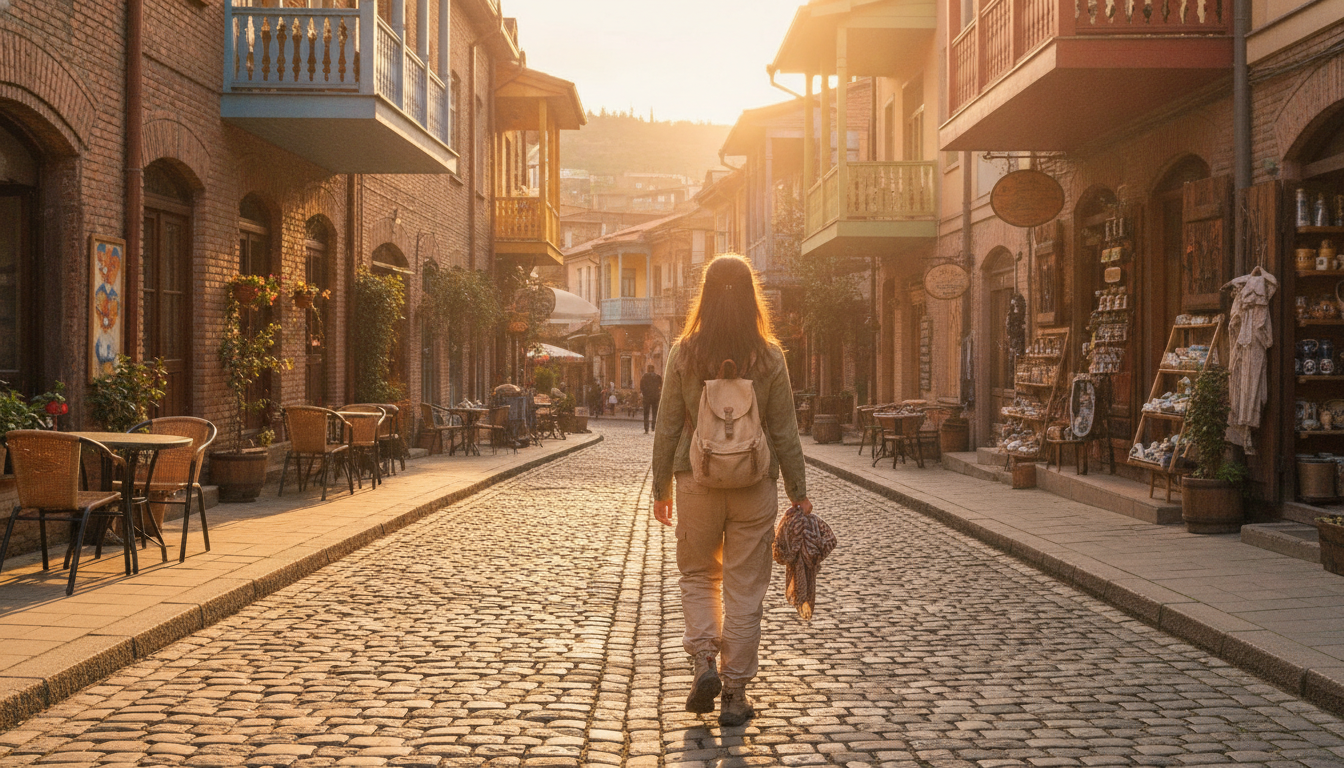
One of my biggest surprises was the density of international remote workers in Tbilisi. At Impact Hub, I met developers from Portugal, content creators from the US and online marketers from Australia. The city has a Facebook group called "Tbilisi Digital Nomads," which counted over 3,200 members in March 2024. Meetups were organized there regularly – from pub quizzes at a dive bar to hikes in the surrounding mountains.
Georgian hospitality is legendary. At a supra (a traditional Georgian feast) at my landlady Nino's, I was welcomed with homemade chacha (Georgian grape brandy) and countless toasts. Georgians love hosting guests, and I never felt like a stranger. One small tip: learn a few words of Georgian – "Gamarjoba" (hello) and "Madloba" (thank you) open many doors.
Safety and challenges: An honest look
I felt safe in Tbilisi as a woman traveling alone. The city has a low crime rate, and I could walk the streets alone in the evening without any problem. According to the Numbeo Crime Index 2024, Tbilisi's safety index of 72.4 is higher than that of many Western European cities.
Still, there are downsides. Air quality in Tbilisi is problematic in winter – according to IQAir, the city at times reached AQI values above 150 (unhealthy) in January 2024. I invested in an air purifier for my apartment, which noticeably eased the problem. Georgian bureaucracy can be frustrating, too: opening a bank account took three visits and countless forms, even though my Georgian was practically nonexistent.
Another point: the language barrier. While young Georgians in Tbilisi often speak English, that's rare among older generations. Google Translate became my best friend, especially when shopping at markets or at the doctor.
Highlights and excursions: Is Georgia suitable for remote workers?
One of the biggest advantages of Georgia for digital nomads is its location. Tbilisi is perfect as a home base from which I could take weekend trips. I reached Kazbegi in the north in three hours by minibus for 10 GEL (about $3.60). The Gergeti Trinity Church at 2,170 meters (about 7,120 feet) is Instagram gold and a real place of power.
The Kakheti wine region is a must, too: I booked a day tour for 60 GEL (about $22) and visited wineries like Pheasant's Tears in Sighnaghi, where I learned how Georgian wine is traditionally made in qvevri (clay amphorae). Georgia is, by the way, the cradle of wine – UNESCO has declared the 8,000-year-old winemaking tradition an intangible cultural heritage.
Georgia's time zone (UTC+4) was perfect for me: I could take calls with clients in Western Europe in the morning at a relaxed pace and still had plenty of time in the afternoon to explore the city.
Georgia experience: Would I come back?
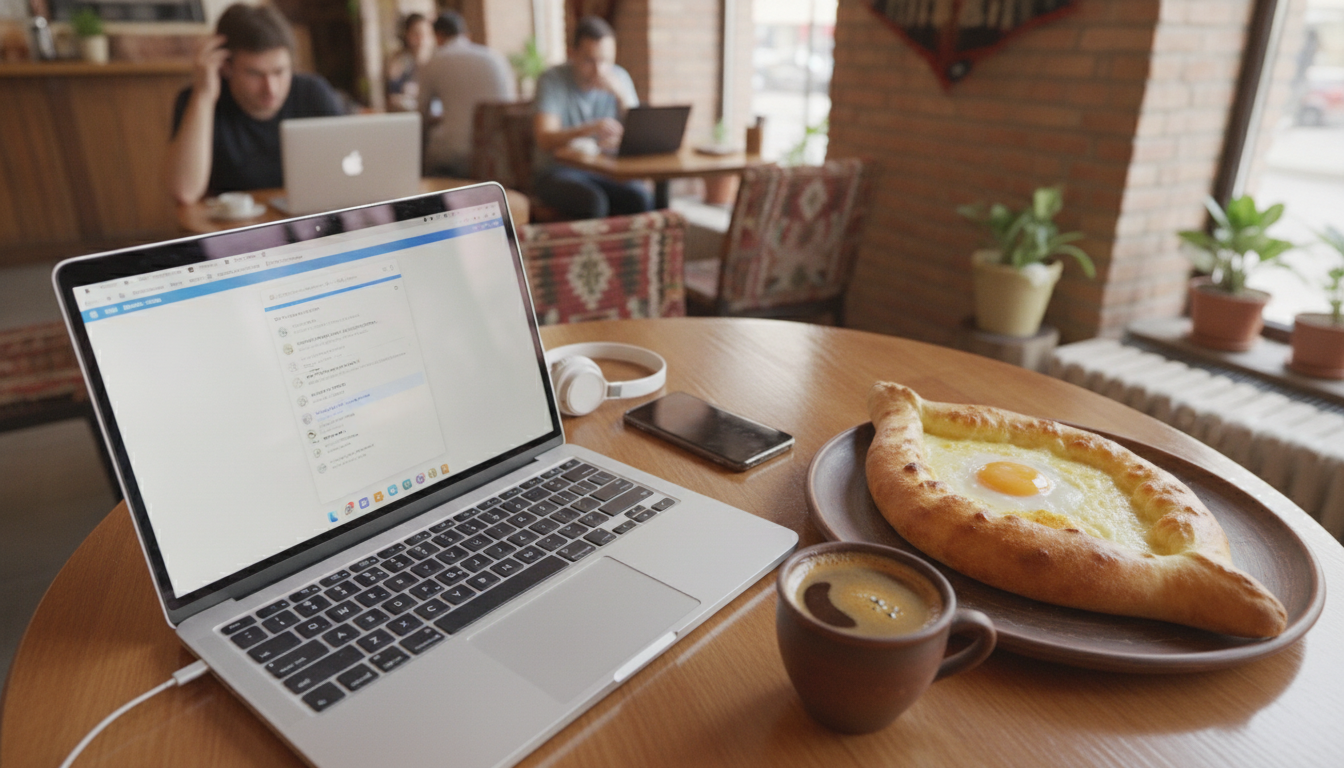
Absolutely. Tbilisi has burned its way into my top 3 nomad cities, alongside Lisbon and Chiang Mai. The combination of low costs, strong infrastructure, a lively community and cultural richness is hard to beat. I'm already planning to return for another three months in fall 2024 – this time I want to stay longer in Batumi on the Black Sea and explore the coastal region.
Who is Georgia suited to as a nomad destination? If you like adventure, are open to new cultures and have a limited budget, Tbilisi is perfect. If, on the other hand, you don't want to give up Western European comfort standards and expect English everywhere, it might take some adjusting.
Frequently asked questions (FAQ)
How long can digital nomads stay in Georgia?
Citizens of more than 90 countries, including all EU states, can stay in Georgia for up to 365 days without a visa. You only need to show a valid passport on arrival. There is no registration requirement for stays under one year, which keeps the bureaucracy to a minimum.
How much does it cost to live in Tbilisi as a digital nomad?
You can live comfortably in Tbilisi on $900 to $1,300 a month. Rent for a furnished apartment is between $380 and $660, eating out costs $5 to $16 per meal, and coworking spaces charge about $55 to $90 a month. The cost of living in Tbilisi for nomads is therefore significantly lower than in Western European cities.
Is the internet in Georgia fast enough for remote work?
Yes. The average internet speed in Tbilisi is over 80 Mbps on fixed lines and about 47 Mbps on mobile. In coworking spaces and most cafés, the Wi-Fi is stable enough for video calls and cloud-based work. A local SIM card with 10 GB of data costs about $5.50 a month and provides a reliable backup solution.
Do I need special insurance for Georgia?
International health insurance isn't an entry requirement, but it's strongly recommended. Medical care in Tbilisi is good, but without insurance, treatment can get expensive. Comprehensive insurance costs about $45 to $65 a month and also covers emergencies. You'll find more details in our article on health insurance abroad.
How safe is Tbilisi for women traveling alone?
Tbilisi is considered very safe. The safety index is 72.4 according to Numbeo 2024, which is above many Western European cities. As a woman traveling alone, I felt safe at all times, even in the evening. As everywhere: trust your gut feeling, avoid deserted areas at night, and keep the Bolt app ready for taxis so you can book official rides.
My conclusion: Georgia as an insider tip for digital nomads
Georgia for digital nomads – this combination works better than I had imagined. Tbilisi offers a rare mix of adventure, comfort and affordability. The city isn't overrun yet like Bali or Lisbon, but the infrastructure is already there. You'll find fast internet, a growing international community and a culture that welcomes you with open arms.
My three months in Tbilisi showed me that you don't need a huge budget to live a fulfilling life as a digital nomad. With less than $1,100 a month, I had a lovely apartment, worked in inspiring coworking spaces and explored one of the oldest wine regions in the world. Georgia isn't a perfect place – the winter air quality, the language barrier and the Soviet-style bureaucracy remind you of that. But it's exactly these rough edges that make the adventure.
If you're looking for a place that challenges you, surprises you and doesn't blow your budget, then pack your packing list and book the flight to Tbilisi. Georgia is waiting to be discovered – before everyone else does.